
##MP##
Anyone involved in wildlife rescue will tell you nothing feels better than returning a creature to the wild after treatment and rehabilitation.
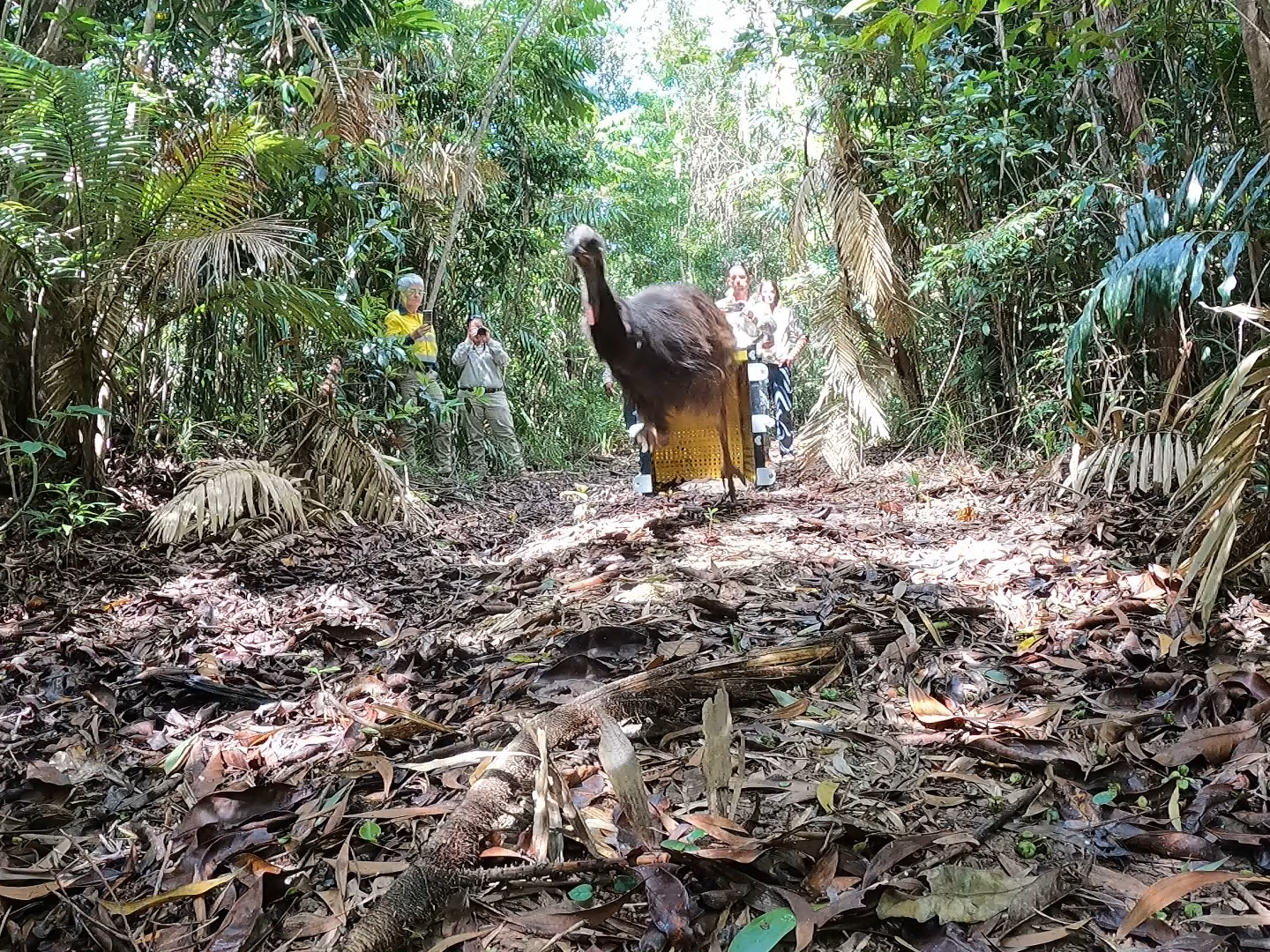
Far North Queensland wildlife officers have shared that special moment twice recently, releasing two endangered cassowaries.
Department of Environment and Science Senior wildlife officer, Dinouk Perera, said both birds had been rescued in the Cassowary Coast region.
“In April 2021, a cassowary chick displaying signs of illness was rescued by wildlife officers at Wongaling Beach.
##BA##
“After the bird was assessed and treated by local vet, Graham Lauridsen, attempts were made to reunite the chick with its parent, but unfortunately these were unsuccessful.
“We then took it to Garners Beach Cassowary Rehabilitation facility for intense monitoring and care.
“A couple of months later it was transferred to the Tablelands Cassowary facility.
“It has a large, forested free-range enclosure that encouraged natural behaviours and reduced the likelihood of the bird becoming habituated to associating humans with food.
“It was later released at Hull Heads National Park as a healthy sub-adult bird.”
Mr Perera said a second cassowary chick with a neck injury was rescued by wildlife officers at Maria Creek in April 2022.
“The cassowary required surgery and remained in care of Tropical Vet Services before being moved to the Garners Beach Cassowary Rehabilitation Facility.
“The bird remained at Garners Beach for seven months where it was closely monitored to ensure the injury was healing well and it was exhibiting natural behaviours.
“Last week, we took the sub-adult cassowary into the Clump Mountain National Park where it was released to take up its vital ecological role as a rainforest gardener.”
The southern cassowary has a vital role in rainforest ecology, eating fruits and dispersing seeds over a wide area.
It’s listed as endangered in the Queensland Wet Tropics region, with only an estimated 4400 left in the wild.
Mr Perera said rehabilitating sick and injured cassowaries poses many challenges, but it’s very rewarding to watch a healthy bird scamper from its cage and disappear into the rainforest when it’s released.
“We’d like to thank Tropical Vet Services for providing vet treatment and Rainforest Reserves Australia which operates the Tablelands Cassowary Facility.
“We’d also like to thank C4, the Community for Coastal and Cassowary Conservation, who provide food and care for cassowaries held in the Garners Beach Cassowary Rehabilitation facility.”
Main points
- DES has returned two cassowaries to the wild
- Both had long stays in rehab after being rescued in the Cassowary Coast region
- Cassowaries are listed as endangered, with just 4400 left in the wild